About
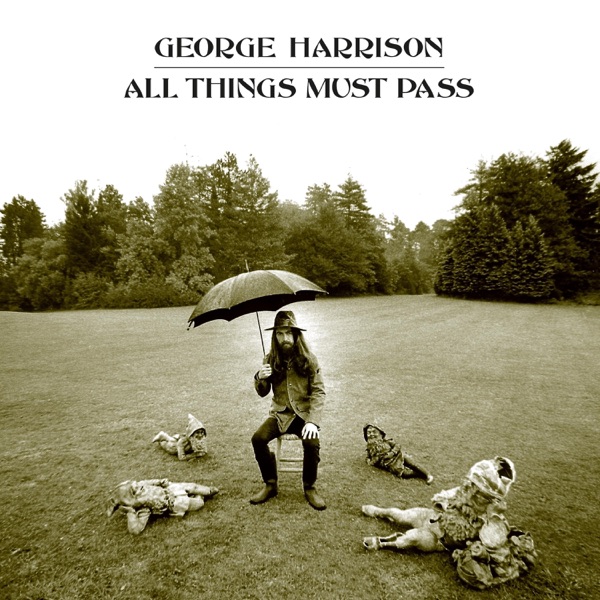
The quiet Beatle who had plenty to say on his own, George Harrison launched one of rock's most celebrated solo careers after the Fab Four called it quits in 1970. Long overshadowed by Lennon and McCartney during his Beatles tenure, Harrison had been quietly stockpiling ideas, and his debut solo statement All Things Must Pass arrived like a flood — a sprawling triple album that immediately established him as a serious artistic force in his own right. The record remains one of the greatest solo albums in rock history, full stop.
Musically, Harrison carved out a unique space that blended rock with Indian classical influences, soulful slide guitar work, and deeply spiritual lyrical themes. His collaboration with producer Phil Spector gave All Things Must Pass its massive, layered sound, while later records like Living in the Material World and Thirty Three & 1/3 showed him refining a more personal, introspective style. His slide guitar playing was instantly recognizable and hugely influential on generations of guitarists who followed.
Beyond the records, Harrison's cultural footprint was enormous. He helped introduce Western audiences to Indian music and the sitar, organized the Concert for Bangladesh in 1971 — arguably the blueprint for every charity rock event since — and later found chart success with the Traveling Wilburys supergroup alongside Dylan, Petty, Orbison, and Lynne. He proved definitively that the third Beatle had been holding back something extraordinary all along.
Discography 16




![Thirty Three & 1/3 (2004 Remaster) [Bonus Track] album cover](https://is1-ssl.mzstatic.com/image/thumb/Music123/v4/61/e2/c4/61e2c4cf-e8c4-05d7-1f78-39c4c66d6c84/5099951336653.jpg/600x600bb.jpg)

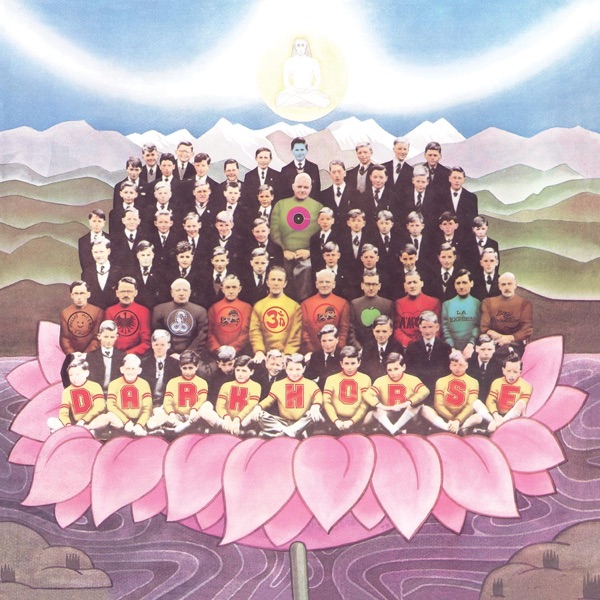


![All Things Must Pass (50th Anniversary) [Super Deluxe] album cover](https://is1-ssl.mzstatic.com/image/thumb/Music123/v4/a5/0d/cd/a50dcdc5-d19a-d5f0-8f98-ce83e4d32dee/4050538896701.jpg/600x600bb.jpg)


Episodes 1

From the Mosh Pit 8

New Episode: George Harrison's **My Sweet Lord** - What Makes This One Work

**David Bowie** Walked Into Trident Studios This Week, 1971—And Changed Everything
The **Beatles** in the Studio, **Iggy** Reunites, and a Double Album That Changed Everything This Week
The Week Elvis Changed Everything, Then Changed It Again

Gary Wright the Dream Weaver died at age 80 last week.
New Episode: The Beatles "I Want To Hold Your Hand" - Let's Talk About It!
New Episode: Caveman Tuesday with some Ex-Beatles — What'd y'all think?

New Episode: Traveling Wilburys Vol. 1 Anniversary - Let's Celebrate!